Showing posts with label Operating Budget. Show all posts

Sunday, June 24, 2012

Mobile CMMS: The Future Maintenance Team's BFF

This week's post comes to us courtesy of Ashley Halligan, an analyst at Software Advice.  Ashley focuses here on a topic that is important to all FM's, the adoption and deployment of CMMS solutions (and by extension all forms of FM technology) to speed response and improve quality of service.


By Ashley Halligan

Anyone who's worked in the maintenance management industry knows that maintenance is a constant task--the slightest oversight can result in costly asset malfunction, leading to expensive repairs or--worst case scenario--replacement. That said, having an around-the-clock maintenance team is a valuable addition to any facility --but having the appropriate staff available at pertinent times may be impossible. 

And in comes the true value of mobile CMMS and its impending trend--providing improved reaction time, resulting in immense cost-savings. 

Because of the sometimes hefty investment of CMMS systems, some organizations have been hesitant to move forward with such an investment. Additionally, some techs are intimidated by new technology--some feeling as though these systems and applications may eliminate the need for their jobs. 

However, these systems and apps help automate communication at an organizational level so that all people have access to synchronized data. 

Some of the core functionalities of these products are as follows: 

Paperless work order management: Managing work orders either on or off-site saves significant amounts of times, allowing data entry that's immediately synchronized into the CMMS organization-wide. This also alleviates the need to handwrite notes that can be miscommunicated, and also take time to reenter at a later time onsite. 

Inventory management: Having synchronized inventory management is another efficient tool in the field--allowing immediate access to available assets, as well as equipment that may be issued to other jobs or locations. At the touch of a finger, a maintenance technician can see if an asset is available and immediately disperse it to the needed location.

Asset management and QR codes: Having an asset's entire maintenance history available instantly helps with assigning jobs, or assessing potential issues. Quick Response or QR codes provide a tool to scan an asset's code, bringing up its entire history--including preventive maintenance, malfunctions, reactive maintenance, etc. 

Having these functions available by all maintenance personnel in all locations an organization may have--provides a platform for instant communication, immediate updates, and a more cohesive reactivity plan in the case of malfunction or emergency. 

Read Halligan's original story here

Monday, October 3, 2011

Procurement Diligence Pays Dividends

In today’s business world it is important that FM’s get the maximum value for investment while minimizing risk.  Being a smart customer is a good way to improve both domains.  Many of the business partners you depend upon daily remain under economic duress, which may affect their ability to perform successfully.  When the video store on the corner closes its doors it’s an inconvenience, when your outsourced maintenance provider or sub-leased tenant goes dark it’s a whole different issue.

An informed customer has a much greater probability of making smart decisions.  I am sure you do a lot of research when you prepare for a major personal purchase, such as a car.  You investigate quality and true cost of ownership, and read reviews from experts and other owners.  It is only when you feel fully informed and armed with the best information that you proceed to the dealer’s lot.  Making a major business purchase is no different – information is king. 

Who does the research is also important.  Abdicating this responsibility to your Purchasing group is not a good strategy.  You know the industries, issues and players.  You are prepared to ask telling questions that will reveal a potential partner’s true viability.  And it is you to whom leadership will look should a business partner’s performance jeopardize your operation because they are cutting corners or have failed.

Basic investigation should include a comprehensive evaluation of financial health and risk.  If a major financial or mission dependent decision is at hand then rigorous investigation is needed.  This should include a review of financial health including how well the company is capitalized, a review of their stock price history, independent conversations with clients of your choosing (ask for a full list and make your own judgment on who to call – don’t just call the three or four they recommend), and a SWOT analysis to understand their market vulnerabilities.  At the bottom line it’s about the bottom line.  Capital is the lifeblood of business.  Make sure they have it and know how to use it wisely.

Take advantage of leverage but maintain balance.  There are lots of ways to gain pricing advantage when dealing in a buyer’s market, but it is possible to damage future performance and the relationship by being too aggressive.  Unsustainable terms may look good now but can cause the provider to fail if they are not able to support operations in an acceptable manner due to cost pressures.  While you are busy figuring out how to get the best possible deal, turn the coin over and consider what provides the best possible value.  Aggressive but fair economics combined with performance measurements and penalities/incentives that compensate the provider based on true value enhancements to the customer will help set a win-win environment.

It’s all in the contract.  All the good intentions in the world aside, it is the contract that rules.  For important commitments contract negotiation should be an FM responsibility with Purchasing and Legal in a support role.  It is fair to include penalties and often it is smart to include incentives, as mentioned above.  Importantly, however, there must be a basis for understanding and interpreting performance in a way that minimizes ambiguity.  Performance data, metrics, SLA’s and KPI’s offer essential legal protection but must be well thought out and agreed to, as should the processes for collecting and reporting.  Another key clause is the right to re-bid and/or renegotiate the contract at any point at the customer’s sole discretion, with an appropriate notification period.  This will allow you to take advantage of economic shifts in the customer’s favor should they occur mid-cycle before you would normally have a chance to re-compete, or to replace the provider should performance fail to meet requirements.

Sunday, January 23, 2011

Total Cost of Ownership and Life Cycle Management Support Asset Investment Decisions

Master planning, Project Delivery and Integrated Life Cycle Management are three distinct processes which when properly coordinated result in a true understanding of the Total Cost of Ownership of a property or portfolio.  This holistic approach to asset management improves the quality of FM planning and services by objectively comparing development options and modeling various operating scenarios.  Taken as a whole and exercised in an integrated fashion over the course of a facility’s life they present a total picture and inform investment and operating decisions at every step.

The key the achieving the desired outcome of information sharing across the three domains is agile systems integration and cooperative communication between the principals involved. 

Reduced to its simplest state, the model takes bottom up information from each of the three domains.  Each domain then synthesizes its own set of data and needs into its formal output, which is then shared with the other two domains.  That said, there is a closer link between Project Delivery and each of its two partners than they share with each other.  Master Planning and Life Cycle Management communicate with each other through the Project Delivery process.  Master Planning contributes asset investment planning, program needs and approval protocols to inform the design and construction process.  Life Cycle Management contributes operations, maintenance and recapitalization information, as well as learning and knowledge gained over the course of a building or portfolio’s life.  The Project Delivery process uses these inputs to develop designs and provide operating models that help improve resident processes.

Master Planning integrates three distinct planning processes with the resource planning process.  The Growth and Impact Plan, Operations Plan, and Capital Needs Plan ask for resources which must be found and allocated.  Resource planning focuses on priorities, resource alignment, and tracking of results.  It, more than Master Planning, is a constantly shifting environment with potential to significantly alter what is possible based on market realities, as we have all experienced in the last two years.


Total Cost of Ownership
Asset Investment Strategy

Capital Needs Plan                                                                                          
Retrofits                                              
Renewal/Replacements                         
Compliance                                          
Life Cycle Plan                                     

Operations Plan
Labor
Materials & Equipment
Systems & Processes
Energy & Utilities

Growth & Impact Plan
Additions
Infrastructure Expansion
Space Plan
Property Expansion


I sometimes run across organizations that fail to understand, appreciate and plan for the real cost of developing new projects.  This leads to under-resourced operations, a growing backlog of deferred maintenance, and financial inability to replace assets when needed.  This is not readily apparent during the grand opening of a new project, but is sometimes glaringly obvious even in the relative early stages of a project’s life cycle.

It is incumbent upon FM’s to understand these issues and their importance, and to communicate and inform decision makers.  It is much easier to do so when one understands financial language and basic principles, and can communicate with decision makers in terms they understand. 

Wednesday, April 7, 2010

Harvard Medical School Dashboards Energy Usage

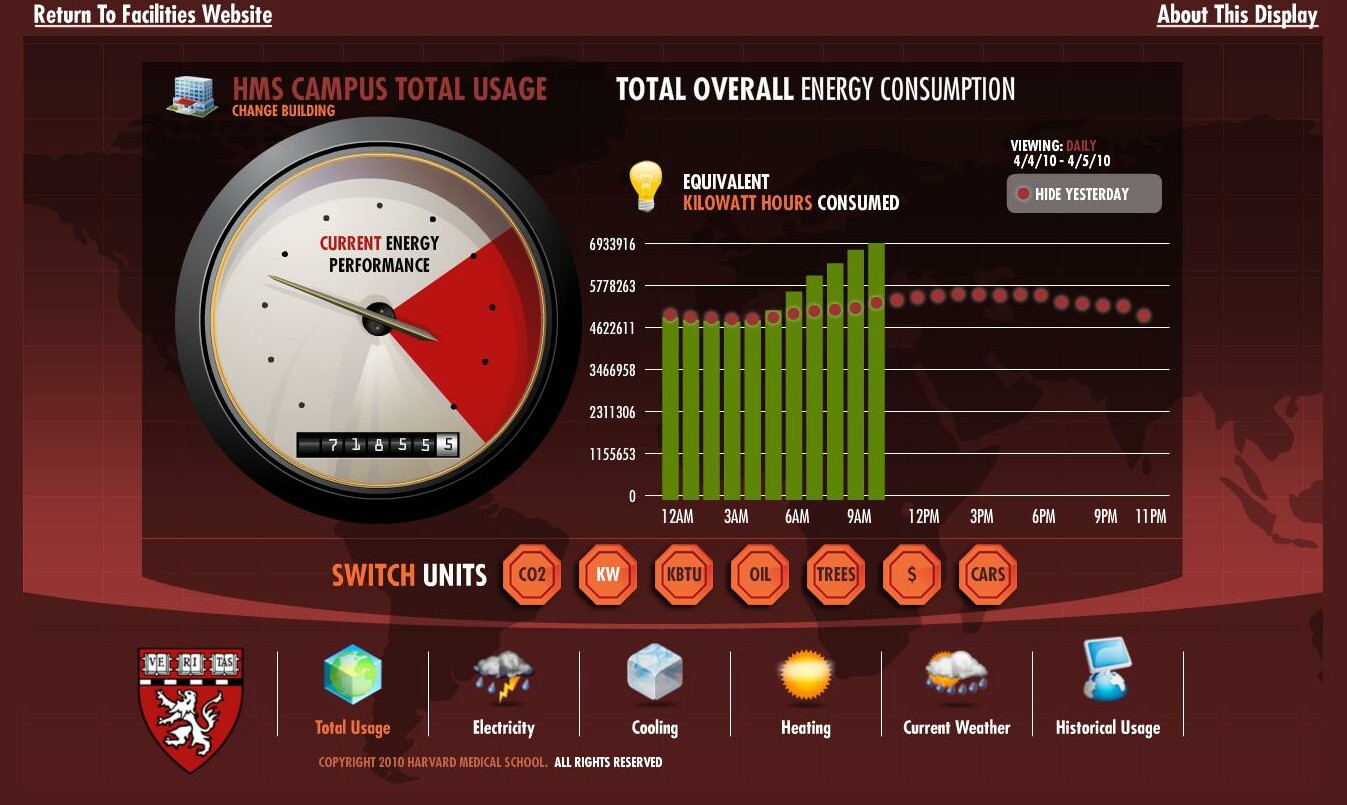
Harvard Medical School earlier this year launched an interactive tool which displays energy consumption across its 2.5 million square feet campus in easy to interpret form. The display allows anyone with web access to visualize current energy consumption of several types, and dollarizes the consumption as well as showing its CO2 profile. See the dashboard here.

Sunday, March 28, 2010

One FM’s View of the Immediate Future

As part of an annual scan process we go through in preparation for the beginning of the budget season our organization takes a hard look at the financial world around us. Right now it’s not a pretty picture. Pick an indicator - residential or commercial real estate, manufacturing, job creation – they’re all in trouble. Okay, we know that. But what does it mean for FM's?

Capital to fund projects is going to be hard to come by. The majority of large projects will stay on the back burner as emphasis remains on improving the bottom line through productivity gains and cost savings. Projects that do make it through the approval gauntlet will most certainly be under increased pressure to meet or beat budget and schedule targets. Given current economic indicators corporate capital is expected to remain constrained through at least the next two years.

Commercial real estate will remain in distress through 2011. Default rates continue to rise and are expected to reach 5% this year with the bottom not coming until 2011 at the earliest. That means even tighter credit at a time when many commercial loans are due to reset. Landlords caught in the squeeze are in trouble. Watch your landlord relationships and their financial health. Their risk is your risk. It might be your opportunity as well.

Emphasis on cutting costs and boosting productivity will escalate. Many companies have made the easy cuts and still have to improve to survive, but additional staff cuts run the risk of so deeply depleting the talent pool as to be too risky. For others, the need to improve is a key to competitiveness even if they have so far remained unscathed. Companies will dial up Continuous Improvement initiatives, but the initiatives must demonstrate hard gains through specific metrics. This will include second tier metrics to make certain that credit is not claimed for gains in one sector, cost as an example, at the expense of another, i.e. quality or revenue.

FM service providers are still under pressure. Virtually every firm you depend upon for service or support is under financial duress. Some have improved their position over the last year and most will make it through, but some will not. Keep a close eye on those that are most critical to your operations or present large financial risk should they fail. One way of doing this is to include corporate financial health information in your routine monthly or quarterly contract reviews. They will expect you to be asking so don’t be shy about it. You should be monitoring key ratios, borrowing capacity, credit rating and stock value as a minimum.

Opportunities exist to gain contract concessions. It might be a lease as noted above or renegotiating terms with your largest outsourced service providers. In most cases FM’s will have several of these opportunities. Your goal here is to drive down the cost of the contract in exchange for considerations in their favor such as extending the term of the contract, while maintaining enough resource to get the job done without endangering quality.

Adoption of alternative office strategies will become more common. Even organizations that traditionally have not ventured into this territory will do so. Companies will analyze occupancy and presence data to understand the scale and scope of stranded real estate investment. For companies who need to grow doing so without real estate expansion will become a priority. Densities will increase with shifts in office entitlement policies and standards.

Smart FM’s will watch the scoreboard. You may not consider yourself an economist but now more than ever you need to understand the basics of how business works in this very interdependent world. You should be watching basic market indicators relevant to your business and thinking strategically about risk and opportunity. FM’s should be knocking on the CFO’s door with observations and trends, and proposing actions to take advantage of opportunities and/or mitigate risk. You don’t have to have details. Demonstrating that you are keeping your finger on the pulse and understand what the data potentially means to your business will raise your own stock and protect the company’s as well. Go knock on the door, don’t wait to answer the phone.

Monday, November 2, 2009

Lease Green, But Know What It Means

Green leasing is in vogue these days and I suppose that’s a good thing. As with any initiative, however, it is important that it be done right; and that can vary from tenant to tenant and landlord to landlord. Many companies are taking advantage of current economic conditions to leverage concessions from landlords, renegotiating leases to lower rates in exchange for extended terms. More and more frequently green leasing is included in these discussions. For some it may even be a prime goal.

It is important that landlord and tenant agree on what their particular form of green lease will include. For some it may be as basic as assuring that building service providers use green products or that a good recycling program is in place. Others may set standards for common spaces, ventilation, natural light or other elements. Some property owners are investing in green building projects as a way of differentiating themselves in a tough market.

Aside from requiring consensus on what green means in a particular case, a green lease also brings accountability for measuring and reporting performance against the green lease standards. The parties must agree here also. What will be measured? What is the standard? How will it be reported? How often will it be reported?

The lease should also be specific and fair in how projects will be capitalized and benefits allocated. For example, an owner will have a hard time justifying capital to retrofit building energy systems to increase efficiency if the resulting benefit goes primarily to tenants. In short, the lease should be crystal clear on the questions of who is responsible for paying for projects or initiatives, how benefits are shared, tracking mechanisms and how differences of opinion will be resolved.

Tenants who occupy a majority or very large portion of a building have more leverage with the landlord and can help move the green initiative along. If this is you, don’t forget to network with other tenants in the building. Including them in the process will be beneficial to them and you, demonstrate your recognition of their role in the building and help speed acceptance by other tenants and the landlord.